
This page is for you if you understand everyday German well and still don't know why an exam text scores lower than you expected. In short: everyday German and exam German are two registers. The exam rewards the second one, and you can learn it.
There is also a video on this topic with twelve examples (in German). Here you get those twelve and twelve more, to read and save.
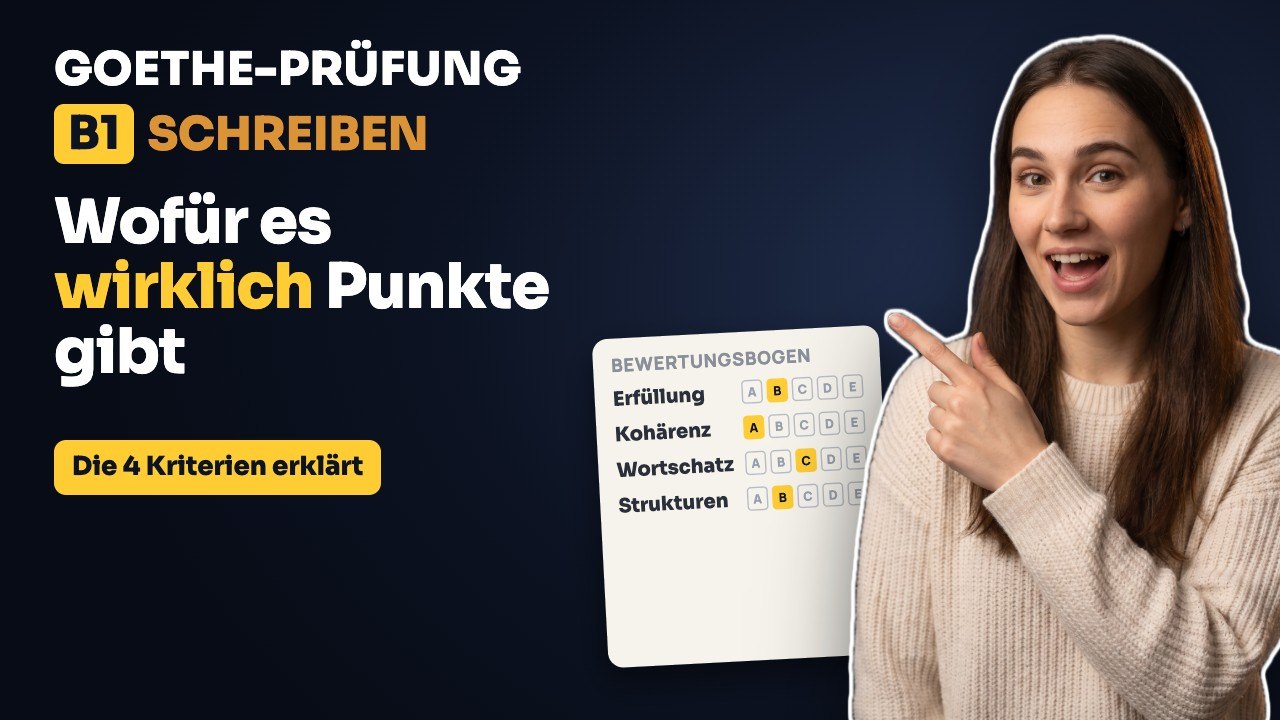
How does the Goethe exam score B1 writing?
Two examiners rate your text independently, each on four criteria. Every criterion has fixed levels from A to E. There is no deduction per mistake, only one level per criterion.
| Criterion | The question behind it |
|---|---|
| Erfüllung | Do content, length and tone fit the task? |
| Kohärenz | Is it one text or a list of sentences? |
| Wortschatz | Are the words precise and varied? |
| Strukturen | Are grammar, word order and spelling right? |
In other words: many sentences in this list are not wrong, they just sit in the wrong situation.
How the levels turn into points is explained in How Goethe writing is scored. As of November 2026.
All 24 examples at a glance
Save this list or take a screenshot. On the left is what is normal in daily life, on the right what the exam rewards. Below, each example is explained with the reason.
Erfüllung
| Everyday | Exam |
|---|---|
| wie geht es dir (to Frau Weber) | wie geht es Ihnen |
| Hallo Frau Schmidt | Sehr geehrte Frau Schmidt |
| echt nervig | Leider funktioniert … nicht. Könnten Sie bitte … |
| Liebe Grüße, dein Tomasz | Mit freundlichen Grüßen |
| forgot the third point | mark all three points |
| Antworten Sie schnell! | Ich würde mich über eine baldige Antwort freuen. |
Kohärenz
| Everyday | Exam |
|---|---|
| und dann, und dann | Danach, anschließend, schließlich |
| aber, aber, aber | jedoch, allerdings |
| Ich habe keine Zeit. Ich komme nicht. | …. Deshalb komme ich nicht. |
| Ich konnte nicht kommen. Ich war krank. | …, weil ich krank war |
| one block without paragraphs | paragraphs and an ending |
| no ending | Ich freue mich auf deine Antwort |
Wortschatz
| Everyday | Exam |
|---|---|
| mega Stress | sehr viel Stress bei der Arbeit |
| Ich denke, ja | Meiner Meinung nach |
| 100 % sicher | davon überzeugt |
| das Ding | der Wasserkocher |
| voll cool | hat mir sehr gut gefallen |
| Ich will | Ich möchte gern |
Strukturen
| Everyday | Exam |
|---|---|
| Weil ich hatte … | Weil ich … hatte, konnte ich |
| freue mich für | freue mich auf |
| interessiert für | interessiere mich für |
| Deshalb ich komme | Deshalb komme ich |
| Gestern ich bin | Gestern bin ich |
| ob können Sie | ob Sie … können |
Video: the 4 criteria with 12 examples (German, 6 min)
- 0:00 Prüfungsdeutsch statt Alltagsdeutsch
- 0:36 Erfüllung: Passt der Text zur Aufgabe?
- 1:58 Kohärenz: Ein Text, keine Liste
- 3:18 Wortschatz: Mehr als ein Wort
- 4:33 Strukturen: Grammatik und Satzbau
- 5:46 Alle Sätze auf einen Blick
Video transcript (German)
In diesem Video lernst du, wie Prüfungsdeutsch anders ist als Alltagsdeutsch. In der Goethe-Prüfung zählt nicht nur, ob dein Deutsch gut klingt. Bewertet wird nach festen Kriterien. Und die kann man lernen. Du siehst typische Sätze, die bessere Version und warum sie Punkte bringt. Am Ende weißt du genau, was du üben musst. Im Goethe-Schreiben lesen zwei Prüfende deinen Text. Sie bewerten ihn nach vier Kriterien: Erfüllung, Kohärenz, Wortschatz und Strukturen. Wir schauen uns jedes Kriterium mit typischen Sätzen an. Erfüllung heißt: Du schreibst zu allen Punkten der Aufgabe, und der Ton passt. Schreibst du an Frau Weber, dann mit Sie, vom ersten bis zum letzten Satz. In der Goethe-Prüfung schreiben wir nicht so. Liebe Frau Weber, wie geht es dir? Wir schreiben so. Liebe Frau Weber, wie geht es Ihnen? Liebe Frau Weber geht, wenn du sie kennst. Aber dann bleibt es bei Sie, vom ersten bis zum letzten Satz. So habe ich am Anfang geschrieben. Hallo Frau Schmidt, Und so schreibe ich heute. Sehr geehrte Frau Schmidt, Hallo ist nicht falsch. An Freunde schreibst du Liebe oder Hallo. An eine Person, die du siezt, schreibst du Sehr geehrte Frau Schmidt. Im echten Leben sagen wir so. Die Heizung ist schon wieder kaputt, echt nervig. In der Goethe-Prüfung schreiben wir so. Leider funktioniert die Heizung seit Montag nicht. Könnten Sie bitte jemanden schicken? Im Alltag reicht der erste Satz. In der Prüfung sagst du genau, was los ist, und du bittest höflich. Kohärenz heißt: Dein Text hat einen Anfang, einen Hauptteil und einen Schluss, und die Sätze hängen zusammen. In der Goethe-Prüfung schreiben wir nicht so. Und dann, und dann, und dann … Wir schreiben so. Danach … Anschließend … Schließlich … Mit verschiedenen Wörtern zeigst du die Reihenfolge. Der Leser weiß immer, wo er ist. In der Goethe-Prüfung schreiben wir nicht so. Aber …, aber …, aber … Wir schreiben so. jedoch … allerdings … im Gegensatz dazu … Drei Mal aber klingt wie eine Liste. Schon ein jedoch oder trotzdem macht den Text abwechslungsreicher. In der Goethe-Prüfung machen wir das nicht so. Ohne Verbindungswörter schreiben: und, und, und. Wir machen es so. Sätze verbinden: deshalb, trotzdem, außerdem. Achte nach deshalb und trotzdem auf das Verb: Es kommt direkt danach. Deshalb komme ich nicht. Beim Wortschatz zählt, ob du passende Wörter benutzt und ob du mehr als die einfachsten kennst. In der Goethe-Prüfung schreiben wir nicht so. Ich habe mega Stress. Wir schreiben so. Zurzeit bin ich beruflich stark belastet. Mega ist Alltagssprache. Im Brief zeigst du mit einem genaueren Ausdruck, was du meinst. In der Goethe-Prüfung schreiben wir nicht so. Ich denke, ja. Wir schreiben so. Meiner Meinung nach … Für deine Meinung brauchst du mehr als ich denke. Wechsle ab: meiner Meinung nach, ich finde, ich bin der Ansicht. In der Goethe-Prüfung schreiben wir nicht so. Ich bin 100 % sicher. Wir schreiben so. Ich bin davon überzeugt, dass … Hundert Prozent passt in den Alltag. Im Forumsbeitrag klingt davon überzeugt sachlicher. Bei den Strukturen schauen die Prüfenden auf Grammatik, Satzbau und Rechtschreibung. So habe ich am Anfang geschrieben. Weil ich hatte keine Zeit, ich konnte nicht kommen. Und so schreibe ich heute. Weil ich keine Zeit hatte, konnte ich nicht kommen. Nach weil steht das Verb am Ende. Danach beginnt der nächste Satzteil mit dem Verb: konnte ich. In der Goethe-Prüfung schreiben wir nicht so. Ich freue mich für den Urlaub. Wir schreiben so. Ich freue mich auf den Urlaub. Auf etwas, das noch kommt, freust du dich mit auf. Über etwas, das schon passiert ist, mit über. In der Goethe-Prüfung schreiben wir nicht so. Ich bin interessiert für Kunst. Wir schreiben so. Ich interessiere mich für Kunst. Es heißt: Ich interessiere mich für etwas. Oder: Ich bin an etwas interessiert. Hier sind alle Sätze aus diesem Video auf einen Blick. Mach dir einen Screenshot für deine Vorbereitung. Wie das alles in einer ganzen E-Mail aussieht, zeige ich dir im nächsten Video: Schritt für Schritt. Folg uns. Und üb deinen Text auf goethecoach.de.
Erfüllung: which sentences don't fit the task?
Sentences don't fit the task when tone, salutation or content don't belong to the situation. The task gives you three points, a person and a reason to write. The exam measures your text against that.
| Not like this | Like this | Why |
|---|---|---|
| Liebe Frau Weber, wie geht es dir? | Liebe Frau Weber, wie geht es Ihnen? | You address Frau Weber with Sie. Then it stays Sie from the first to the last sentence. |
| Hallo Frau Schmidt, | Sehr geehrte Frau Schmidt, | Hallo is not wrong, but it belongs to friends. Someone you address with Sie gets "Sehr geehrte". |
| Die Heizung ist schon wieder kaputt, echt nervig. | Leider funktioniert die Heizung seit Montag nicht. Könnten Sie bitte jemanden schicken? | In the exam you say exactly what is wrong, and you ask politely. |
| Liebe Grüße, dein Tomasz | Mit freundlichen Grüßen, Tomasz Nowak | If you start with "Sehr geehrter Herr Weber", you close formally too. |
| Start writing at once and forget the third point. | Mark the three points first, then write. | The task says: write something on all three points. |
| Antworten Sie schnell! | Ich würde mich über eine baldige Antwort freuen. | An order to someone you address with Sie sounds rude. The request as a wish is polite. |
In other words: read the task first, then write. If you address someone with Sie, use Sie in the salutation, the body and the closing.
Kohärenz: how do you tell a text from a list?
You tell a text from a list by the words that connect the sentences and by a beginning, a middle and an end. A list only puts sentences in a row.
| Not like this | Like this | Why |
|---|---|---|
| Und dann, und dann, und dann … | Danach … Anschließend … Schließlich … | Different words show the order. The reader always knows where they are. |
| Aber …, aber …, aber … | jedoch … allerdings … im Gegensatz dazu … | Three times aber sounds like a list. A single "jedoch" already makes the text more varied. |
| Ich habe keine Zeit. Ich komme nicht. | Ich habe keine Zeit. Deshalb komme ich nicht. | After deshalb and trotzdem the verb comes right next. |
| Ich konnte nicht kommen. Ich war krank. | Ich konnte nicht kommen, weil ich krank war. | A subordinate clause joins reason and result in one sentence. |
| One long block without paragraphs | Salutation on one line, short paragraphs, one closing sentence | The task names the structure: Anrede, Einleitung, order of the content points, Schluss. |
| The text stops after the last content point. | Ich freue mich auf deine Antwort. Viele Grüße | Without an ending the text feels unfinished. |
In other words: choose three connectors before the exam, for example deshalb, trotzdem and außerdem, and practise the word order that goes with them.
Wortschatz: which words show you know more than the simplest ones?
Precise words show that you can describe the situation instead of naming it roughly. Everyday words like "mega", "voll" or "Ding" are not wrong, but they say too little.
| Not like this | Like this | Why |
|---|---|---|
| Ich habe mega Stress. | Zurzeit habe ich sehr viel Stress bei der Arbeit. | "Mega" is everyday speech. "Sehr viel" and saying where the stress comes from show more precisely what you mean. |
| Ich denke, ja. | Meiner Meinung nach … | For your opinion you need more than "ich denke". Alternate: meiner Meinung nach, ich finde, ich bin der Ansicht. |
| Ich bin 100 % sicher. | Ich bin davon überzeugt, dass … | A hundred percent fits everyday talk. In a letter "davon überzeugt" sounds more objective. |
| Das Ding in der Küche geht nicht. | Der Wasserkocher in der Küche funktioniert nicht. | The exact noun tells the reader what it is about. |
| Der Kurs war voll cool. | Der Kurs hat mir sehr gut gefallen. | "Voll cool" is youth slang. The second sentence is more precise and more polite. |
| Ich will einen Termin. | Ich möchte gern einen Termin vereinbaren. | "Ich will" sounds like an order. "Ich möchte gern" is the polite form. |
In other words: a big vocabulary only helps when the sentence works. A word you don't know well costs more than it earns. A simple sentence you really mean beats a C1 sentence from the internet.
Strukturen: which grammar mistakes cost points most often?
Word order costs points most often, followed by prepositions and spelling. These are rules you can lock in within a short time.
| Not like this | Like this | Why |
|---|---|---|
| Weil ich hatte keine Zeit, ich konnte nicht kommen. | Weil ich keine Zeit hatte, konnte ich nicht kommen. | After weil the verb goes to the end. Then the next part starts with the verb: konnte ich. |
| Ich freue mich für den Urlaub. | Ich freue mich auf den Urlaub. | For something still to come you say "auf". For something that has already happened, "über". |
| Ich bin interessiert für Kunst. | Ich interessiere mich für Kunst. | The verb is: sich interessieren für. Or: an etwas interessiert sein. |
| Deshalb ich komme nicht. | Deshalb komme ich nicht. | After deshalb the verb comes right next. |
| Gestern ich bin ins Kino gegangen. | Gestern bin ich ins Kino gegangen. | In a statement the verb is always in second position. |
| Ich möchte fragen, ob können Sie mir helfen? | Ich möchte fragen, ob Sie mir helfen können. | After ob the verb goes to the end, as after weil. |
In other words: shorter sentences leave less room for mistakes. A sentence as long as a rental contract can break in many places. Two short sentences that are right are safer.
How do you check your own text in five minutes?
Ask yourself four questions, one per criterion, and read your text through once. It takes five minutes and uncovers many of these mistakes.
- Erfüllung: Did I write all three points of the task? Do salutation and closing fit the person, du or Sie?
- Kohärenz: Is there a salutation, an introduction, a main part and an ending? Did I use more connectors than "und" and "aber"?
- Wortschatz: Is there an everyday word like "mega", "voll" or "Ding" that I can say more precisely?
- Strukturen: Is the verb at the end after weil and right next after deshalb? Are all nouns capitalised and are the sentences after ob and weil built correctly?
In other words: you find many mistakes yourself if you read. You just don't notice them while writing, because your mind is already on the next sentence.
Frequently asked questions
How many criteria does Goethe B1 writing have?
Goethe B1 writing has four criteria: Erfüllung, Kohärenz, Wortschatz and Strukturen. Two examiners rate your text independently, each criterion on fixed levels from A to E.
Does every single mistake cost points?
No. There is no fixed deduction per mistake. Each criterion gets a level from A to E. What matters is whether mistakes get in the way of understanding and how often they occur. That is why it pays to practise recurring mistakes first.
Can I write colloquial German in the exam?
It depends on the person. In an email to a friend, "Hallo" and relaxed sentences are right. To someone you address with Sie, you need a formal salutation and polite phrasing. The criteria check whether your tone fits the situation.
When do I write "Sehr geehrte" and when "Hallo"?
You write "Sehr geehrte Frau Schmidt" to people you address with Sie. You write "Hallo" or "Liebe" to friends and family. If you are unsure, the task helps: if it names Frau or Herr with a surname, write formally.
How long should a B1 email be?
The task states the length. For the email in Teil 1 the instruction is circa 80 words. More important than the word count is that you write on all three points of the task.
Can I get my text rated before the exam?
Yes. In the Writing Check GoetheCoach rates your B1 text on the four criteria and shows where you lose points. It is an estimate, not an official result.
Four meme cards to save
Four examples as images. Saving and sharing is fine.
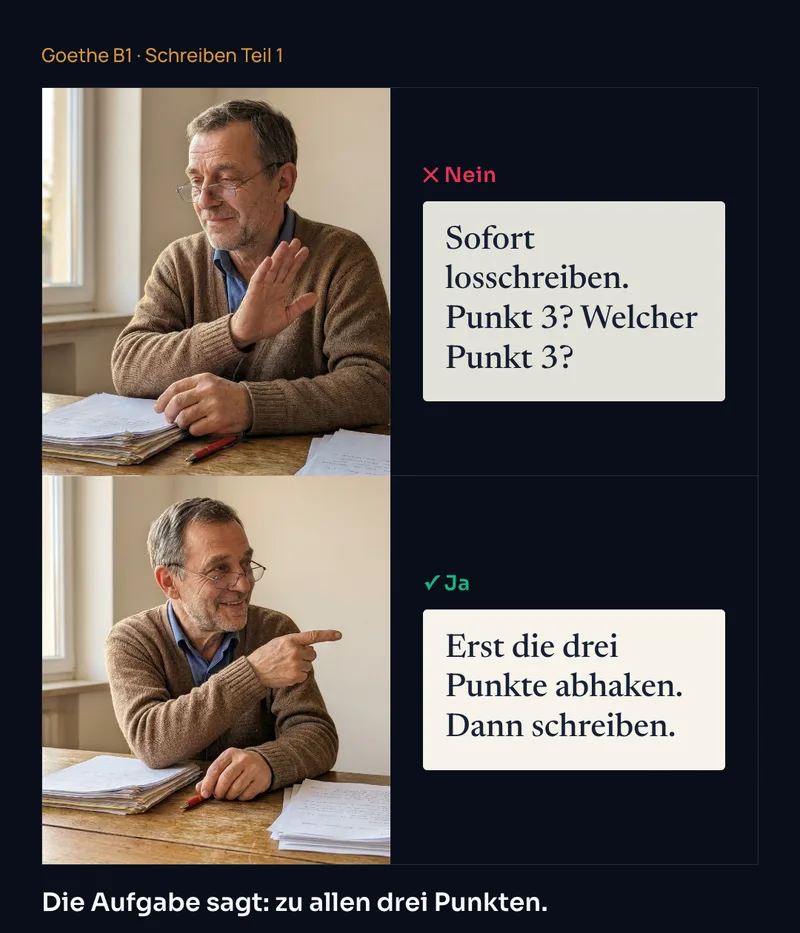
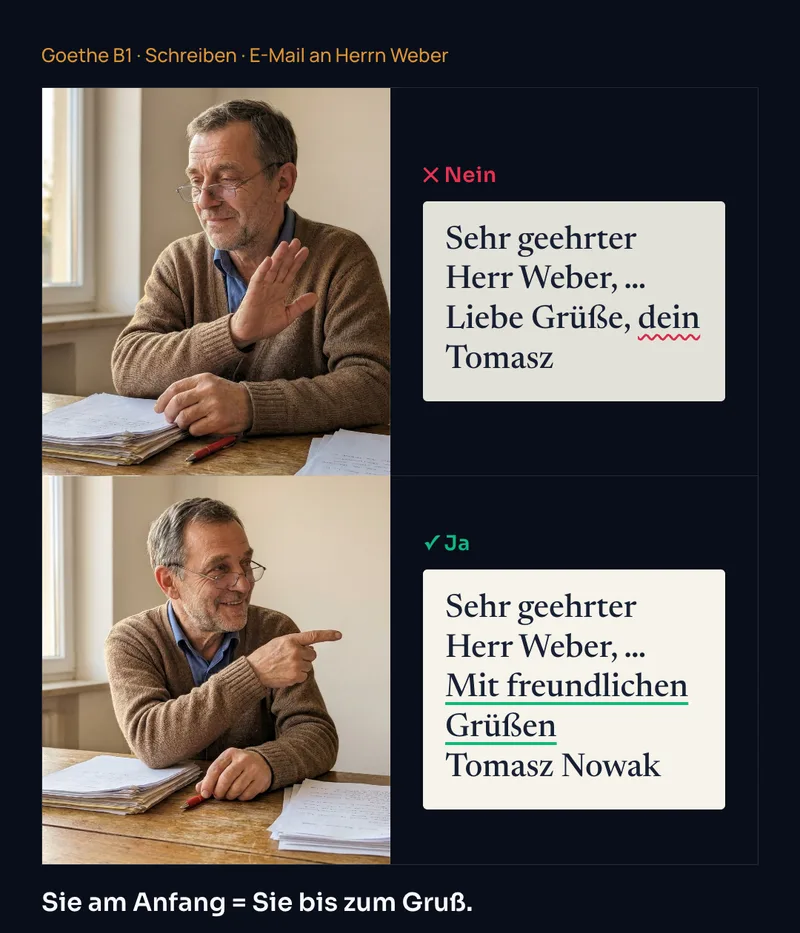
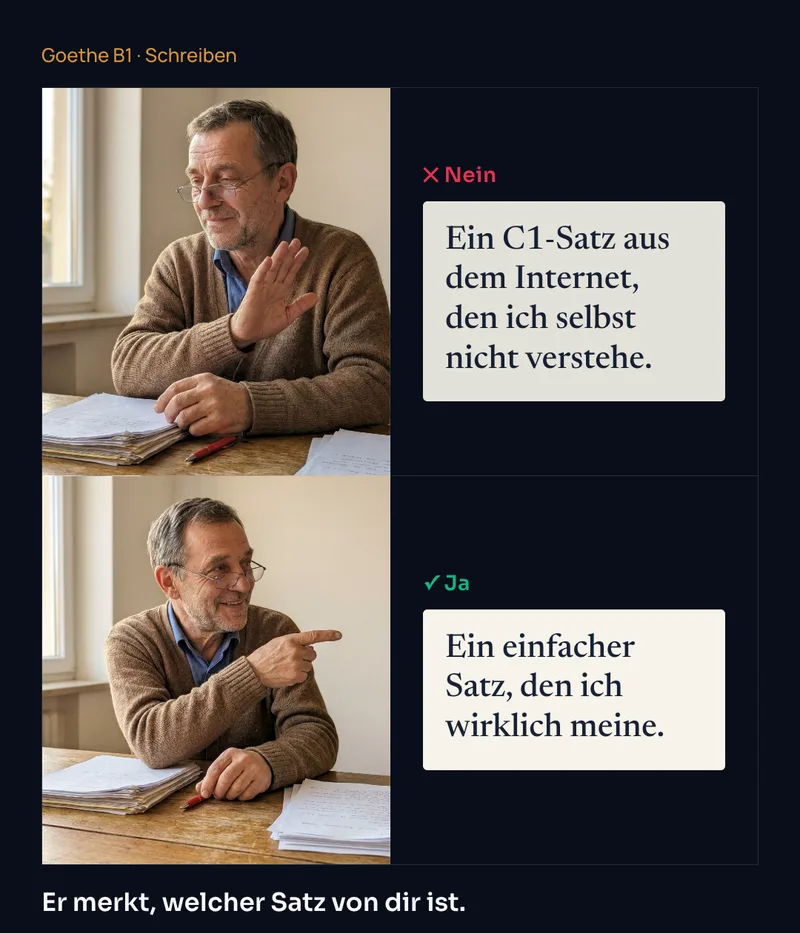
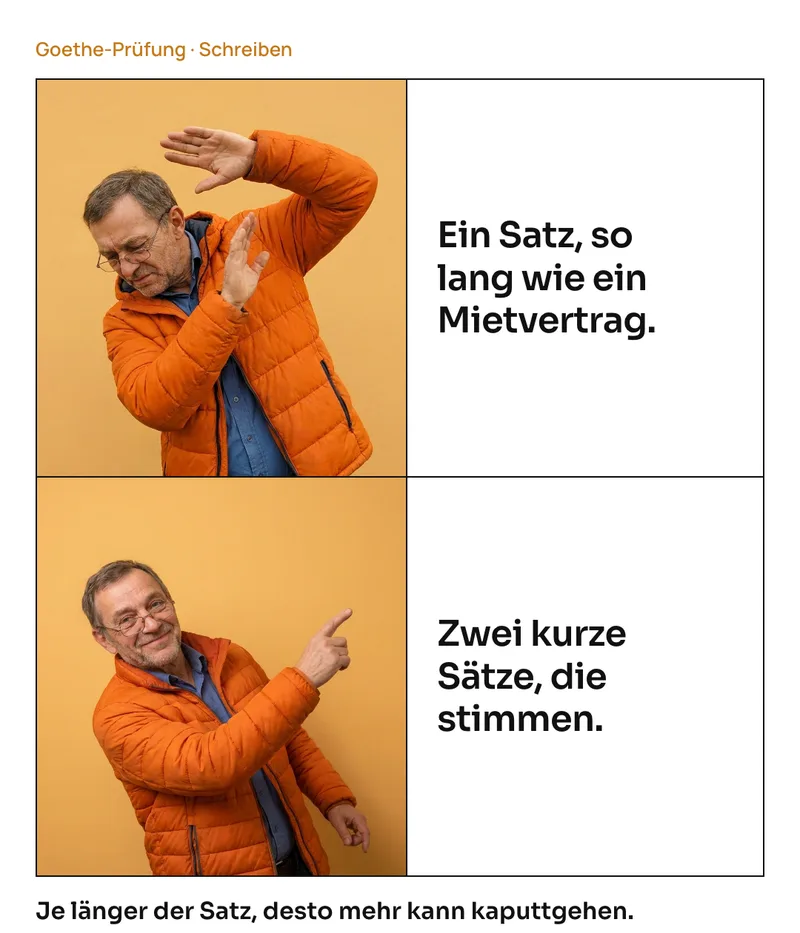
The characters and scenes are AI-generated and exaggerated. The rules are in the tables above. GoetheCoach is not affiliated with the Goethe-Institut.
Keep reading
How many points a missing content point costs is covered in the article on scoring. The most frequent mistakes by type are in common mistakes in the Goethe writing exam. Structure and examples for the email are in Goethe B1 letters and Goethe B1 writing.
Prepare for B1 step by step
Real B1 tasks in the exam format, points per criterion and a study plan up to your exam day. Free.
Get my B1 study plan